
Introduction
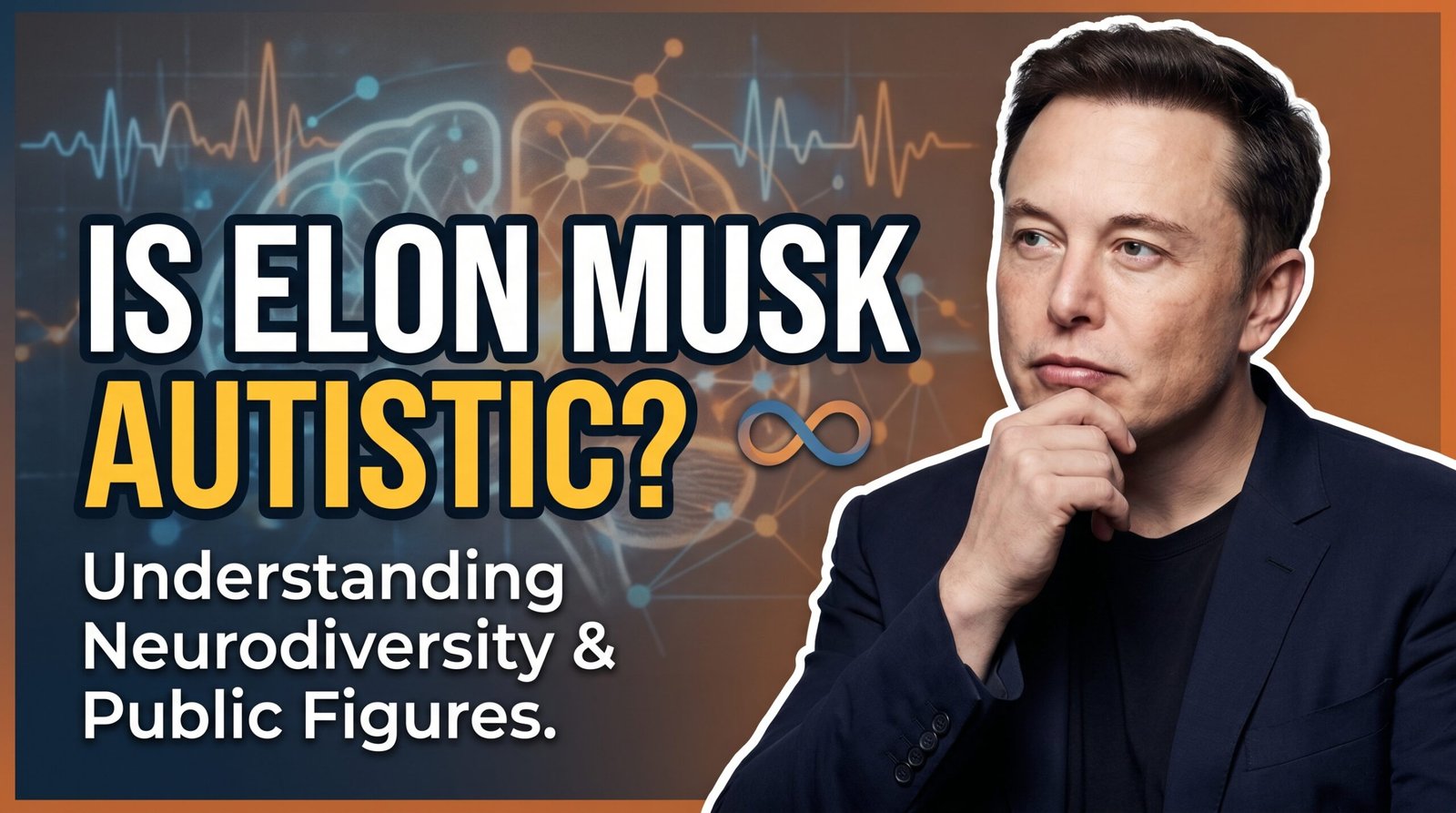
Public interest in the lives of well-known figures often extends beyond their professional achievements to their personal identities and experiences. One frequently asked question is whether Elon Musk is autistic. As a prominent entrepreneur associated with companies such as Tesla and SpaceX, Musk’s communication style, intense focus, and unconventional thinking have drawn attention and speculation.
Understanding the answer requires separating verified facts from assumptions. It also involves understanding what autism spectrum disorder actually means, how it is defined today, and why this conversation matters.
This article provides a clear, evidence-based explanation of Elon Musk’s statement, the meaning of Asperger’s syndrome within the autism spectrum, and the broader implications of autism in adults. It also addresses common misconceptions and offers a balanced perspective grounded in respect and accuracy.
Is Elon Musk Autistic? The Direct Answer
Yes. Elon Musk has publicly stated that he has Asperger’s syndrome, which is part of autism spectrum disorder.
He made this statement during his appearance on Saturday Night Live in May 2021. This disclosure was widely covered and marked a significant moment in raising awareness about autism, particularly among adults.
When and How Did Elon Musk Reveal This?
During his opening monologue on Saturday Night Live, Elon Musk said:
“I’m actually making history tonight as the first person with Asperger’s to host SNL… or at least the first to admit it.”
This statement was delivered in a lighthearted manner, but its impact was substantial. It brought attention to the presence of autism in highly visible public figures and sparked conversations about neurodiversity.
What Is Asperger’s Syndrome?
Asperger’s syndrome was historically used to describe individuals who displayed characteristics of autism but did not have significant delays in language or cognitive development.
Key Traits Often Associated with Asperger’s
- Difficulty with social interaction and interpreting social cues
- Strong focus on specific interests
- Preference for routine and predictability
- Literal understanding of language
- Deep concentration on complex topics
It is important to emphasize that these traits vary widely from person to person.
How Asperger’s Fits Into Autism Spectrum Disorder
In 2013, the Diagnostic and Statistical Manual of Mental Disorders (DSM-5) updated its classification system. Asperger’s syndrome is no longer a separate diagnosis and is now included under autism spectrum disorder (ASD).
Why the Change Happened
- To create a more consistent diagnostic framework
- To reflect the wide range of autism presentations
- To emphasize support needs rather than labels
Today, autism is understood as a spectrum that includes a broad range of abilities and challenges.
What Does Autism Spectrum Disorder Mean?
Autism spectrum disorder is a developmental condition that affects how individuals communicate, interact socially, and process sensory information.
Two Core Areas of Autism
Social Communication Differences
- Challenges with back-and-forth conversation
- Difficulty understanding nonverbal cues
- Differences in social interaction styles
Restricted or Repetitive Behaviors
- Repetitive movements or actions
- Strong routines or preferences
- Intense focus on specific topics
- Sensory sensitivities
These characteristics can vary in intensity and presentation.
What Autism May Look Like in Adults
Autism is often associated with childhood, but many adults are also on the spectrum. In some cases, individuals are diagnosed later in life.
Common Traits in Autistic Adults
- Preference for direct and clear communication
- Strong analytical or technical thinking
- Deep interest in specialized subjects
- Sensitivity to noise, light, or other sensory inputs
- Difficulty navigating unstructured social situations
These traits can influence how individuals work, communicate, and engage with others.
Understanding Elon Musk’s Public Persona
While it is important not to diagnose or interpret behavior beyond what has been publicly stated, some aspects of Elon Musk’s public persona have been discussed in relation to autism.
Communication Style
Musk is known for:
- Direct and concise communication
- Occasional unconventional phrasing
- Focus on technical details
Intense Focus on Work and Innovation
His involvement in multiple industries reflects:
- Deep concentration
- Long-term commitment to complex goals
Preference for Logic-Driven Thinking
Many of his public statements emphasize:
- Problem-solving
- Systems thinking
- Engineering-based approaches
These characteristics are often associated with individuals who think in highly analytical ways.
Why Autism Is Described as a Spectrum
The term “spectrum” reflects the wide variation in how autism is experienced.
Key Points About the Spectrum
- Some individuals require significant support, while others are highly independent
- Communication abilities vary widely
- Strengths and challenges differ from person to person
This variability means that no single individual represents all aspects of autism.
Common Misconceptions About Autism
Public discussions about autism often include misunderstandings. Addressing these misconceptions is essential.
Autism Is Not a Measure of Intelligence
Autistic individuals can have a wide range of intellectual abilities. Many have average or above-average intelligence.
Autism Does Not Prevent Success
People on the spectrum contribute to fields such as technology, science, art, and business.
Autism Is Not the Same for Everyone
Each person’s experience is unique. Generalizations can lead to inaccurate assumptions.
Social Differences Are Not Deficiencies
Different communication styles reflect alternative ways of interacting, not necessarily a lack of ability.
Why Elon Musk’s Disclosure Matters
When a high-profile individual like Elon Musk speaks openly about being on the autism spectrum, it has broader implications.
Increasing Public Awareness
It brings attention to autism in adults and encourages more open discussions.
Reducing Stigma
Public acknowledgment helps challenge stereotypes and misconceptions.
Promoting Neurodiversity
It highlights the value of different ways of thinking and problem-solving.
Encouraging Acceptance
Greater visibility can lead to more inclusive attitudes in society and workplaces.
The Importance of Respectful Discussion
When discussing autism, especially in relation to public figures, it is important to maintain accuracy and respect.
Avoiding Speculation
Only rely on verified statements rather than assumptions.
Recognizing Individual Identity
Autism is one aspect of a person’s identity, not a complete definition.
Using Appropriate Language
Language should be neutral, respectful, and free from stereotypes.
Broader Understanding of Neurodiversity
Neurodiversity is the concept that neurological differences, including autism, are natural variations of the human brain.
Key Principles of Neurodiversity
- Differences are not deficits
- Diversity in thinking can lead to innovation
- Inclusion benefits individuals and society
This perspective shifts the focus from limitations to strengths and contributions.
FAQs
What type of autism does Elon Musk have?
He has stated that he has Asperger’s syndrome, which is now considered part of autism spectrum disorder.
Was Elon Musk officially diagnosed?
He has publicly said he has Asperger’s, but detailed medical information has not been shared publicly.
Can autistic individuals achieve success?
Yes. Many autistic individuals succeed in various fields. Success depends on individual strengths, opportunities, and support systems.
Is Asperger’s still a diagnosis?
No, it is no longer used as a separate diagnosis in the DSM-5. It is included under autism spectrum disorder.
Why is there so much interest in this topic?
People are curious about how autism relates to success, personality, and behavior, especially in well-known individuals.
Conclusion
Yes, Elon Musk has publicly stated that he has Asperger’s syndrome, which is part of autism spectrum disorder. However, the significance of this fact goes beyond the label itself.
Autism is a diverse and complex spectrum that encompasses a wide range of abilities and experiences. Understanding it requires moving beyond stereotypes and recognizing the individuality of each person.
Public discussions about autism, when approached with accuracy and respect, can increase awareness, reduce stigma, and promote acceptance. By focusing on understanding rather than assumptions, we can contribute to a more informed and inclusive society.