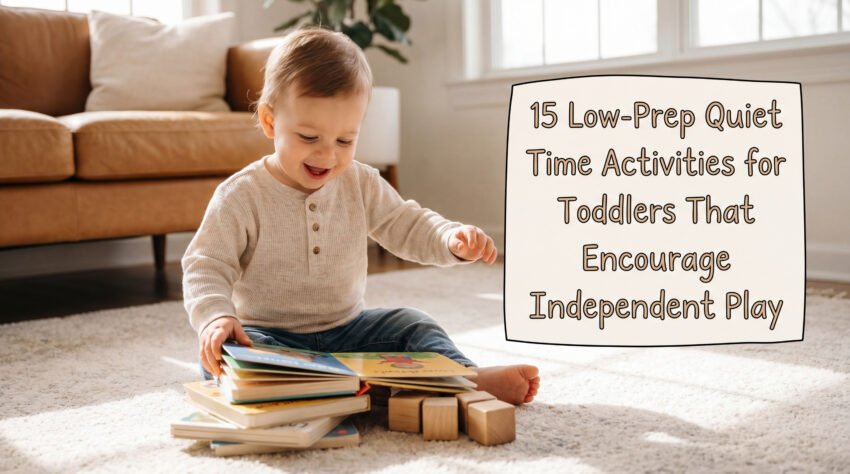
The day a toddler drops their afternoon nap is often a profound transition for parents. That guaranteed block of midday silence, a crucial window to work, manage household tasks, or simply decompress, suddenly vanishes. In its place is a highly energetic child requiring continuous supervision. The most effective solution to this developmental milestone is implementing a structured quiet time routine.
However, instructing a toddler to play quietly is rarely successful without a framework. They require engaging parameters to maintain focus and stay in one place. Setting up elaborate crafts or complex games requires time and energy that parents often lack in the middle of the day. The answer lies in mastering low-prep quiet time activities. These are strategically selected tasks that utilize everyday household items, require mere minutes to set up, and are specifically designed to hold a toddler’s attention while fostering independent play and cognitive growth.
This comprehensive guide details the psychological benefits of rest periods and provides a robust library of fifteen highly detailed, low-prep activities guaranteed to encourage independent play.
The Developmental Importance of Quiet Time
Quiet time is far more than a parental survival strategy; it is a fundamental component of early childhood development. Transitioning from a sleep state to a period of conscious rest offers significant cognitive and emotional benefits.
Cognitive Decompression and Processing
Toddlers are constantly bombarded with new information, sensory inputs, and social interactions. Without a nap, their rapidly developing brains require a different mechanism to process this data. Quiet time provides an environment free from external demands and overstimulation. This period of low-demand activity allows the brain to sort and store the information acquired during the morning, which is a vital process for memory consolidation and cognitive growth.
Fostering Independent Play
Independent play is a learned skill, not an innate trait. Quiet time forces a child to rely on their own imagination and internal resources for entertainment. When an adult is not actively guiding the narrative or solving problems for them, toddlers must exercise their own executive functioning skills. They learn how to initiate a task, sustain attention, and problem-solve independently, which builds profound self-confidence.
Emotional Regulation
The late afternoon is notorious for toddler meltdowns, largely due to sensory and social fatigue. A designated period of solitude allows the child’s nervous system to reset. By engaging in low-stakes, repetitive, or sensory-soothing activities, cortisol levels decrease. This practice in self-soothing and emotional regulation is foundational for their future social and academic environments.
How to Establish a Successful Quiet Time Routine
Implementing quiet time requires patience, consistency, and clear boundaries. A toddler will not naturally play alone for an hour on the first attempt. The transition must be highly structured.
Establish the Environment
Quiet time must occur in a safe, completely child-proofed environment where the toddler can be left unsupervised, though monitored via a baby monitor or from a nearby room. The bedroom is usually the optimal location. Remove highly stimulating toys, electronics, and any climbing hazards. The environment should signal rest and focus.
Utilize Visual Timers
Toddlers do not understand the abstract concept of time. Telling them to stay in their room for thirty minutes is ineffective. Utilize a visual timer, such as a clock that shows a colored disk gradually disappearing as time elapses. Explain to the child that quiet time is over when the color is completely gone. This provides a tangible metric for them to monitor and drastically reduces anxiety.
Implement the Gradual Release Method
Begin with extremely short intervals. On the first day, set the visual timer for five to ten minutes. Praise them enthusiastically when they succeed. Over the course of several weeks, gradually increase the time by five-minute increments. The ultimate goal is forty-five to sixty minutes, but this endurance must be built incrementally.
Zero-Prep Household Explorations
These activities require absolutely zero preparation. They utilize safe household items that are already available, offering immediate engagement.
1. The Safe Junk Drawer Exploration
The Setup
Provide your toddler with a small box or basket filled with safe, non-choking-hazard items from your junk drawer or home office desk.
The Execution
Include items such as clean, oversized erasers, thick rubber bands, a blunt-nosed plastic ruler, a soft tape measure, and oversized paperclips. Place the basket on the floor and allow the child to explore the items without instruction.
Developmental Focus
This encourages open-ended exploration and tactile discovery. Toddlers are naturally fascinated by adult tools. Examining these objects builds fine motor manipulation and satisfies their curiosity about everyday items.
2. Tupperware Lid Matching
The Setup
Pull out a dozen plastic food storage containers and their matching lids. Separate the lids from the bases.
The Execution
Scatter the bases and lids on the floor. Challenge the toddler to find the matching pair and snap the lid onto the correct container.
Developmental Focus
This is a complex cognitive task for a toddler. It requires visual discrimination to match shapes and sizes, and spatial reasoning. Snapping the lids onto the containers also requires bilateral coordination and upper body strength.
3. The Sock Sorting Station
The Setup
Grab a basket of clean, unfolded laundry that consists primarily of socks of varying colors and sizes.
The Execution
Dump the socks onto the floor and ask the child to find the matching pairs and group them together.
Developmental Focus
Similar to the Tupperware activity, this builds visual discrimination and pattern recognition. It also instills a sense of responsibility and inclusion in household chores, which builds self-esteem and independence.
4. Book Stacking and Browsing
The Setup
Pull a stack of sturdy, visually engaging board books from their shelf or the living room.
The Execution
Place the books in a pile on the floor. The goal is not reading; it is interacting with the books. Toddlers can stack them like blocks, line them up to create a road for toy cars, or independently flip through the pages to examine the illustrations.
Developmental Focus
This promotes early literacy skills. Handling books, turning pages left to right, and independently engaging with printed imagery fosters a foundational love for reading and narrative structure.
Kitchen Pantry Fine Motor Challenges
The kitchen is an excellent resource for low-prep toddler activities. These tasks require grabbing a few simple tools and offer highly engaging fine motor challenges.
5. Colander and Pipe Cleaner Threading
The Setup
Grab a metal or plastic colander from the kitchen cabinet and a handful of colorful craft pipe cleaners.
The Execution
Demonstrate how to poke a pipe cleaner through one hole in the colander and pull it out the other side. Leave them to weave the pipe cleaners in and out of the holes independently.
Developmental Focus
This is an elite fine motor activity. It heavily targets the pincer grasp, requiring the use of the thumb and index finger, and demands intense hand-eye coordination. It promotes sustained attention and quiet, concentrated focus.
6. Dry Pasta and Shoelace Stringing
The Setup
Take a handful of dry penne or rigatoni pasta and a clean, thick shoelace. Tie a large, secure knot at one end of the shoelace so the pasta does not slip off.
The Execution
Have the toddler thread the pasta onto the shoelace one by one to create a textured necklace or snake.
Developmental Focus
Stringing requires bilateral coordination, which is the ability to use both sides of the body together in a coordinated way, with one hand holding the string and the other manipulating the pasta. This is a foundational skill for later tasks like buttoning a shirt or using scissors.
7. Muffin Tin Color Sorting
The Setup
Place a standard twelve-cup muffin tin on the floor. Cut out small circles of different colored construction paper and place one at the bottom of each cup. Provide a bowl of mixed items such as large pom-poms, oversized buttons, or colored blocks.
The Execution
The toddler must pick up an item from the bowl and place it into the muffin tin cup with the corresponding color.
Developmental Focus
Sorting is a fundamental mathematical skill. It teaches categorization, cognitive flexibility, and visual discrimination. Providing kitchen tongs to move the items adds an extra layer of fine motor difficulty.
8. The Spice Jar Smell Test
The Setup
Select four to five distinct, mild spices from your cabinet, such as cinnamon, oregano, garlic powder, or a cotton ball soaked in vanilla extract. Ensure they are not spicy or irritating to the eyes or nose.
The Execution
Open the jars, place them securely on a tray, and let the toddler carefully smell each one. Ask them to think about which scent they prefer or what it reminds them of.
Developmental Focus
This engages the olfactory system, which is often neglected in standard play. Sensory engagement helps ground the nervous system and builds neural pathways related to memory and environmental awareness.
Mess-Free Sensory and Art Activities
Art and sensory play are incredibly valuable, but parents often avoid them during quiet time to prevent a massive cleanup. These activities provide the benefits of sensory engagement without the mess.
9. Water Painting on Construction Paper
The Setup
Provide a small, heavy-bottomed bowl containing a half-inch of plain water, a clean paintbrush, and several sheets of colored construction paper.
The Execution
The toddler dips the brush in the water and paints on the paper. The water turns the paper a darker shade, mimicking the effect of real paint. As it dries, the canvas clears, allowing them to start over.
Developmental Focus
This allows for creative expression and practicing the proper grip on a writing utensil. It provides immediate visual feedback regarding cause and effect without any risk of staining clothes or carpets.
10. Painter’s Tape Rescue Mission
The Setup
Gather several small, hard plastic toys, such as animal figures or building blocks. Use blue painter’s tape to tape the toys firmly onto a baking sheet, a low wall, or the floor.
The Execution
The toddler must use their fingers to peel the tape back and rescue the toys from the surface.
Developmental Focus
Peeling tape is surprisingly difficult for developing fingers. It builds extreme fine motor strength and resilience. It also provides a satisfying tactile and auditory experience as the adhesive rips away from the surface.
11. Sensory Bags with Hair Gel
The Setup
Fill a heavy-duty, gallon-sized ziplock bag with a bottle of inexpensive, clear hair gel. Add a handful of large googly eyes, plastic beads, or smooth buttons. Squeeze the air out, seal the bag tightly, and tape the edges shut with heavy packing tape to prevent leaks.
The Execution
Place the bag on the floor or tape it to a low window. The toddler can squish the gel and push the items around inside the bag using their fingers.
Developmental Focus
This offers profound tactile stimulation without the mess of a standard sensory bin. Pushing the small objects through the thick gel requires isolated finger movements and provides deep pressure input, which is highly calming for the nervous system.
12. Contact Paper Sticky Wall
The Setup
Cut a large square of clear contact paper. Peel off the backing and use painter’s tape to secure it to the wall, with the sticky side facing outward. Provide a basket of lightweight items like tissue paper squares, feathers, or cotton balls.
The Execution
The toddler sticks the items onto the wall to create a collage. They can easily peel them off to rearrange the design.
Developmental Focus
Working on a vertical surface is crucial for upper body development. It forces wrist extension, strengthens the shoulder girdle, and improves core physical stability while engaging their creative faculties.
Concentration and Spatial Building Activities
Activities that require building and spatial manipulation are excellent for sustaining a toddler’s attention over longer periods and encouraging deep concentration.
13. Solo Cup Pyramids
The Setup
Purchase a large sleeve of standard plastic solo cups.
The Execution
Give the toddler the stack of cups and demonstrate how to build a basic pyramid by placing them side by side on the floor and stacking the next row on top.
Developmental Focus
Building pyramids requires a delicate touch and a foundational understanding of balance and gravity. When the tower inevitably falls, it teaches cause and effect, as well as emotional resilience in the face of frustration.
14. Aluminum Foil Sculpting
The Setup
Tear off several large sheets of standard aluminum foil from the kitchen dispenser.
The Execution
Allow the toddler to crumple, fold, and twist the foil into different shapes, balls, or imitation jewelry.
Developmental Focus
Foil is a highly unique tactile material. It holds its shape when crushed, providing immediate structural feedback. Crumpling requires whole-hand strength, while shaping requires more delicate fine motor control and spatial visualization.
15. The Playing Card Drop
The Setup
Cut a thin, rectangular slit into the plastic lid of a clean coffee can or an empty oatmeal container. Provide a deck of standard playing cards.
The Execution
The toddler must carefully align and push the playing cards one by one through the slit into the container.
Developmental Focus
This is a low-prep variation of a classic educational activity. It requires precise hand-eye coordination and spatial alignment to fit the card exactly into the slot, forcing the toddler to slow down and concentrate deeply.
Implementing an Activity Rotation System
To keep these low-prep activities effective, you must implement a strategic rotation system. If a toddler has access to all fifteen activities at all times, the novelty will quickly wear off, and the quiet time routine will fail.
Purchase several small, inexpensive plastic bins. Assemble four to five different activities from the list above and place one activity in each bin. These bins must be kept entirely out of reach and sight during normal, everyday playtime. They must remain exclusive to the quiet time hour. By restricting access, the items retain their high value and novelty.
Rotate the inventory frequently. Do not offer the same bin every day. Introduce the colander activity on Monday, the tape rescue on Tuesday, and the water painting on Wednesday. At the end of the week, observe which activities held their attention the longest. Cycle out the ones that failed to engage them and introduce new low-prep options from the list. This constant rotation ensures that the toddler is always presented with a fresh cognitive challenge, keeping the quiet time routine successful long-term.
Frequently Asked Questions (FAQs)
How long should quiet time last for a two or three-year-old?
When first transitioning away from naps, start with just five to ten minutes. You must actively build their endurance for independent play. For a typical three-year-old, a successful quiet time routine should eventually last between forty-five minutes to an hour. Expecting a toddler to play independently for longer than an hour is generally unrealistic for their current attention span.
What do I do if my toddler refuses to stay in their room?
This is the most common hurdle when establishing the routine. If they leave the room, calmly and wordlessly walk them back. Do not engage in conversation, debate, or scolding. Your goal is to make leaving the room incredibly boring and unrewarding. You may have to walk them back repeatedly on the first day. Extreme consistency is the only way they will internalize the boundary.
Are screens acceptable during quiet time?
Relying on tablets or television defeats the developmental purpose of quiet time. Screens are a form of passive consumption, while quiet time is strictly meant to foster active, independent problem-solving and self-regulation. While there is a designated time for educational programming in a child’s day, quiet time should remain screen-free to allow the child’s brain to decompress and process their day without digital stimulation.
How do I handle quiet time if I have multiple children?
If possible, physically separate the children into different rooms. Siblings playing together is standard playtime, which usually leads to high energy or conflict. The goal of quiet time is solitude. If they must share a room, designate specific physical zones for each child and enforce a strict rule against talking or interacting until the visual timer finishes.
Conclusion
Navigating the end of the toddler napping era is undeniably a challenging phase of parenting, but it also presents a valuable opportunity to foster a new stage of childhood independence. By replacing the midday nap with a structured, consistent quiet time routine, parents reclaim necessary breaks while providing their children with crucial cognitive and emotional benefits.
The key to long-term success does not lie in elaborate, expensive setups. It lies in utilizing simple, low-prep activities that challenge a toddler’s fine motor skills, encourage sensory exploration, and require independent problem-solving. With a strategic rotation of household items, the use of a visual timer, and unwavering boundary enforcement, quiet time can successfully transform from a daily struggle into a peaceful, highly productive hour that benefits the entire family.