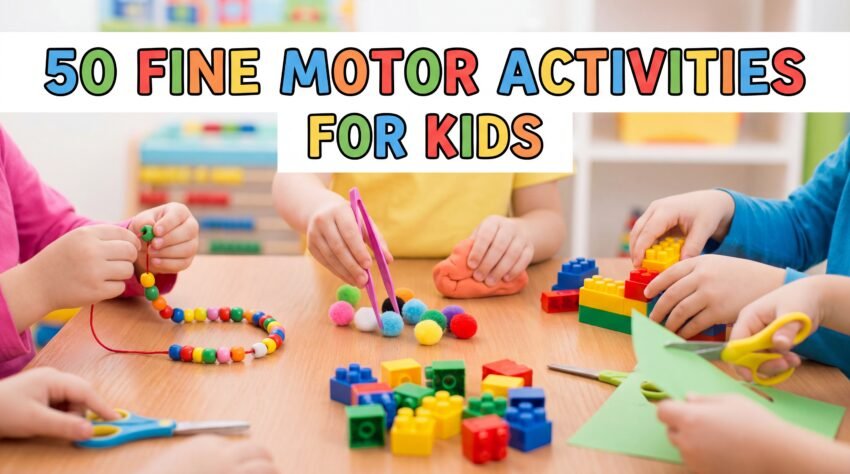
Fine motor skills play a major role in a child’s everyday development. From holding a pencil to buttoning a shirt, children rely on small hand and finger movements to complete daily tasks independently. Strong fine motor skills also support handwriting, eating, cutting with scissors, drawing, and classroom learning.
Parents and teachers often look for simple ways to help children strengthen these skills without making practice feel like work. The good news is that fine motor development can happen naturally through hands-on play and creative activities.
This guide covers the best fine motor activities for kids of different ages. Whether you are working with toddlers, preschoolers, or school-age children, these activities can help improve hand strength, coordination, finger control, and concentration while keeping learning fun.
What Are Fine Motor Skills?
Fine motor skills involve the small muscles in the hands, fingers, and wrists. These skills help children perform precise movements that require coordination and control.
Examples of fine motor tasks include:
- Holding crayons and pencils
- Using scissors
- Zipping jackets
- Tying shoelaces
- Picking up small objects
- Turning pages
- Building with blocks
Children develop fine motor skills gradually through practice and repeated movement. Activities that involve grasping, pinching, squeezing, stacking, and tracing are especially useful for improving these abilities.
Why Fine Motor Activities Are Important for Kids
Fine motor activities do more than improve hand movement. They also support cognitive and physical development in several ways.
Improves Hand Strength
Children need strong hand muscles for writing, drawing, and self-care tasks. Activities like squeezing playdough or using tweezers help strengthen these muscles naturally.
Supports Hand-Eye Coordination
Many activities require children to coordinate what they see with what their hands are doing. This helps improve focus and precision.
Encourages Independence
Strong fine motor skills allow children to complete daily tasks on their own, such as dressing, feeding themselves, and opening containers.
Prepares Children for School
Writing, cutting, coloring, and using classroom tools all depend on fine motor control. Early practice can make school tasks easier and less frustrating.
Fine Motor Activities for Toddlers
Toddlers learn best through sensory play and simple hands-on tasks. These activities should focus on basic grasping and finger movement.
1. Pom-Pom Transfer
Give children a spoon or scoop and let them move pom-poms between bowls. This activity improves coordination and grip control.
2. Sticker Peeling
Peeling and placing stickers strengthens finger muscles and improves precision.
3. Playdough Squeezing
Rolling, pinching, and flattening playdough develops hand strength while encouraging creativity.
4. Large Bead Threading
Threading oversized beads onto string helps toddlers practice hand-eye coordination.
5. Stacking Cups
Stacking and nesting cups builds finger control and spatial awareness.
6. Finger Painting
Finger painting encourages sensory exploration while strengthening finger movement.
7. Clothespin Clipping
Clipping clothespins onto containers improves finger strength and coordination.
8. Tearing Paper
Tearing paper into strips is a simple but effective fine motor exercise.
Fine Motor Activities for Preschoolers
Preschoolers are ready for more structured activities that involve precision and control.
9. Scissor Cutting Practice
Provide safety scissors and let children cut along straight or curved lines.
10. Lacing Cards
Lacing activities help improve bilateral coordination and concentration.
11. Tweezer Games
Using tweezers to pick up small objects strengthens the pincer grasp needed for writing.
12. Building With LEGO Bricks
Connecting small blocks requires precise finger movements and hand strength.
13. Cotton Ball Transfer
Children can use tweezers or spoons to move cotton balls into cups.
14. Tracing Shapes
Tracing helps children practice pencil control and proper hand positioning.
15. Painting With Q-Tips
Q-tip painting improves grip and encourages careful movement.
16. Pegboard Activities
Placing pegs into holes strengthens finger muscles and hand coordination.
17. Button Practice
Using fabric boards or old shirts teaches children how to fasten buttons independently.
18. Water Dropper Games
Using droppers to transfer colored water improves finger strength and control.
Fine Motor Activities for Kindergarten Kids
School-age children benefit from activities that support writing, crafting, and detailed hand movements.
19. Origami
Folding paper carefully helps improve precision and concentration.
20. Maze Worksheets
Drawing through mazes improves pencil control and visual tracking.
21. Sewing Cards
Simple sewing cards help children practice coordination and patience.
22. Hole Punch Art
Using a hole punch develops hand strength while creating fun craft designs.
23. Pipe Cleaner Threading
Threading beads or pasta onto pipe cleaners strengthens hand-eye coordination.
24. Puzzle Building
Puzzles improve finger dexterity and problem-solving skills.
25. Rubber Band Boards
Stretching rubber bands around pegs strengthens finger muscles.
26. Crayon Peeling
Peeling paper from crayons helps improve finger control.
27. Dot-to-Dot Activities
Connecting dots improves pencil grip and fine motor precision.
28. Craft Stick Building
Building structures with craft sticks encourages careful placement and coordination.
Easy Household Fine Motor Activities
You do not need expensive toys to help children develop fine motor skills. Many household items work just as well.
29. Sorting Coins
Children can sort coins by size or color while improving finger control.
30. Opening and Closing Containers
Twisting lids and snapping containers shut strengthens wrist and hand muscles.
31. Sponge Squeezing
Squeezing water from sponges helps build grip strength.
32. Pasta Threading
Dry pasta and string make excellent threading materials.
33. Using Kitchen Tongs
Children can move small snacks or toys with kitchen tongs for a fun coordination challenge.
34. Folding Laundry
Folding washcloths or socks encourages bilateral hand use.
35. Spraying Water Bottles
Spraying water onto windows or plants strengthens hand muscles.
Sensory Fine Motor Activities for Kids
Sensory activities combine touch and movement, making them ideal for younger children.
36. Rice Bin Treasure Hunt
Hide small toys in rice and let children search for them using their fingers or tweezers.
37. Sand Tracing
Children can draw shapes or letters in sand using their fingers.
38. Bubble Wrap Popping
Popping bubble wrap strengthens finger muscles while providing sensory feedback.
39. Shaving Cream Writing
Writing letters in shaving cream encourages tactile learning and fine motor practice.
40. Kinetic Sand Building
Molding and shaping kinetic sand develops finger strength and creativity.
Fine Motor Activities That Build Hand Strength
Strong hands are essential for writing and self-care tasks. These activities focus specifically on strengthening muscles.
41. Playdough Cutting
Children can use plastic scissors to cut playdough into pieces.
42. Stress Ball Squeezing
Soft stress balls help improve grip strength.
43. Using Eyedroppers
Squeezing eyedroppers repeatedly builds finger control.
44. Animal Walks
Activities like crab walks and bear crawls strengthen hands and wrists.
45. Wall Push-Ups
Simple wall push-ups improve upper body and hand stability.
Classroom Fine Motor Activities
Teachers can use these activities during centers, transitions, or indoor playtime.
46. Pencil Control Worksheets
Tracing patterns and lines helps children improve handwriting readiness.
47. Magnetic Letter Sorting
Picking up and sorting magnetic letters strengthens the pincer grasp.
48. Clipboard Writing Stations
Writing on vertical surfaces improves wrist positioning and hand control.
49. Sticker Pattern Activities
Children can complete sticker patterns while practicing precise placement.
50. Stamp Art
Using rubber stamps improves grip and hand coordination.
Signs a Child May Need More Fine Motor Practice
Every child develops at a different pace, but some signs may indicate a need for extra support.
Watch for:
- Difficulty holding crayons or pencils
- Trouble using scissors
- Avoiding coloring or drawing
- Weak hand strength
- Problems buttoning clothes
- Poor handwriting control
- Difficulty picking up small objects
If these challenges continue over time, parents may consider speaking with a pediatrician or occupational therapist for guidance.
Tips for Helping Children Improve Fine Motor Skills
Keep Activities Fun
Children learn best through play. Avoid turning activities into strict lessons.
Practice Regularly
Short daily activities are more effective than occasional long sessions.
Use Age-Appropriate Tasks
Choose activities that match the child’s skill level to avoid frustration.
Encourage Independence
Allow children to attempt tasks on their own, even if it takes longer.
Limit Excessive Screen Time
Hands-on activities are essential for developing real-world coordination and strength.
Best Fine Motor Toys and Tools
Some toys naturally encourage fine motor development.
Popular options include:
- Building blocks
- Pegboards
- Playdough kits
- Lacing cards
- Puzzles
- Tweezers
- Magnetic tiles
- Shape sorters
- Craft supplies
Rotating toys regularly can keep children engaged and motivated.
Frequently Asked Questions
What are fine motor activities for kids?
Fine motor activities are tasks that strengthen the small muscles in the hands and fingers. These activities help children improve coordination, grip strength, and control.
At what age should children develop fine motor skills?
Fine motor development begins in infancy and continues throughout childhood. Toddlers practice basic grasping skills, while older children refine writing and coordination abilities.
How can I improve my child’s fine motor skills at home?
You can improve fine motor skills through simple activities like threading beads, using playdough, drawing, cutting paper, and sorting small objects.
Why are fine motor skills important for school?
Children need fine motor skills for writing, cutting, coloring, using classroom tools, and completing self-care tasks independently.
What toys help develop fine motor skills?
Building blocks, puzzles, lacing cards, tweezers, and arts-and-crafts materials are excellent for strengthening fine motor skills.
Conclusion
Fine motor development is an important part of childhood growth, and the best way to strengthen these skills is through engaging, hands-on activities. From playdough and sticker games to threading beads and cutting shapes, simple everyday tasks can make a big difference in a child’s coordination and confidence.
Parents and teachers do not need complicated tools or expensive programs to support fine motor growth. Consistent practice, creative play, and age-appropriate challenges are often enough to help children build stronger hands and better control over time.
By including fine motor activities in daily routines, children can improve essential life skills while learning through play.