

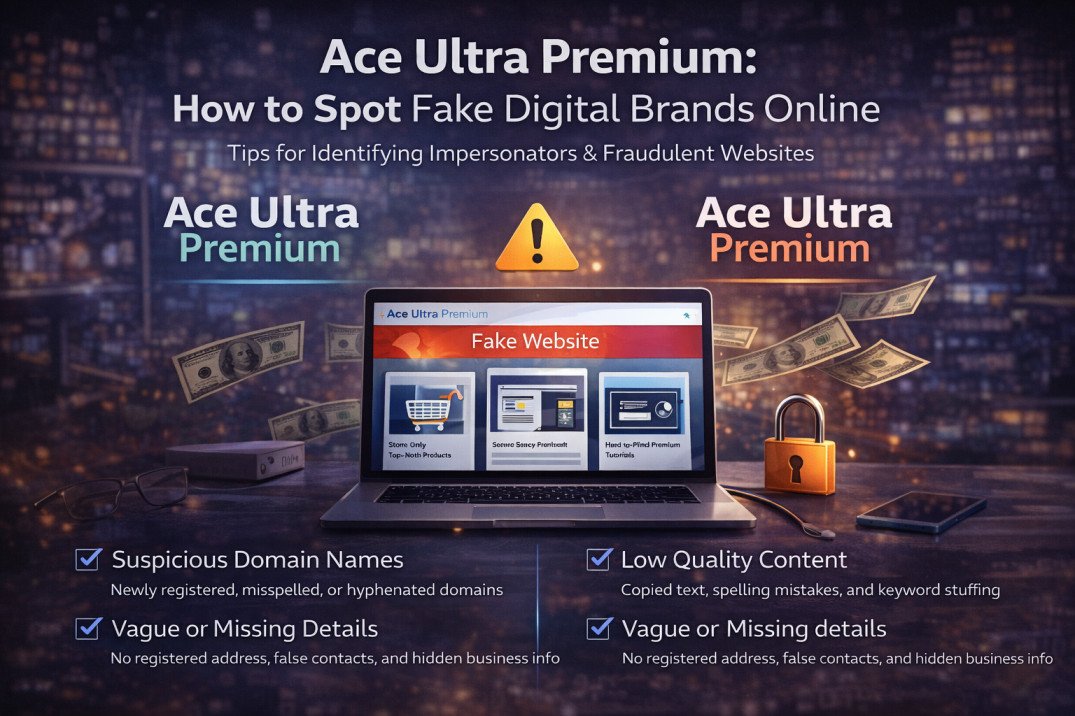
Online commerce has expanded rapidly and makes it easy for consumers to find new brands. Counterfeiters and impersonators exploit the ease of finding new brands by infringing upon brand names, duplicating websites, and misleading consumers. The concern with searches for Ace Ultra Premium and the word authentic is, how can consumers avoid being scammed by fake brands?
This article explains the methods used by fake brands, how consumers can verify the brand to determine if it is authentic, and how to engage with brands safely while conducting research online. Ace Ultra Premium is often mentioned, but the guidelines offered can be applied to any brand.
Understanding Fake Digital Brands

Fake digital brands are online brands that impersonate legitimate brands. They gain consumer trust by imitating name, logos, and descriptions of merchandise. Many of these websites are created to capture consumer payments, personal data, or generate advertisement revenue.
Signs of Fake Online Brands
- Brand-new domain names without any prior brand activity
- Unrelated brand logos and names on various platforms
- Unreliable and unverifiable business details
- Websites that are plagiarized or poorly rewritten
- Fake or suspicious website payment and contact methods
These examples help consumers analyze if a business presence is real or fake.
Why Imitators Target Ace Ultra Premium
Fake digital brands impersonating Ace Ultra Premium are attempting to impersonate a well-known and highly searched brand name. As a brand becomes well-known on the internet, these fake brands create “real vs fake” websites, look-alike domain names, and unofficial websites to sell products attributed to the well-known brand.
The Ace Ultra Premium brand has attracted digital impersonators. In attempting to verify information related to the brand, consumers may try to evaluate:
- If a website is official to the brand
- If the information on the internet is correct
- If the website is a reputable source of information
Because of this, consumers must evaluate information beyond a simple internet search to determine if the information is correct.
Fake Digital Brand Websites
1. The domain name is suspicious.
Fake websites typically utilize:
- Additional words in the brand name
- Hyphens or misspellings
- Multiple “official” domains that are very similar
Always consider the brand name’s domains when evaluating a brand’s digital presence.
2. Low Quality Content
Websites with little or no effort show:
- Numerous spelling errors
- Spelling mistakes
- Repeating content
- Content over optimiztion
- High keyword density
Reputable businesses on the other hand have their content professionally written with a high degree of consistency.
3. Business Details Missing or Vaguely Stated
Trustworthy businesses have:
- About Us page
- Address or registered location of the business
- Clear company policies (privacy policy, return policy, terms)
If any of this info is missing or duplicated, that’s a cause for concern.
4. No Online Presence
Real businesses have:
- Established social media pages
- Quality and authority web mentions
- Same image and video branding on all used marketing channels
Fake businesses operate without any online presence or show a sudden spike of activity.
Some other ways you can prove that a business is real include:
Check Domain History
Use any public domain history lookup services to know:
- The date of domain registration
- The extent of ownership blind registration
- The existence of several domains with similar names
Be careful with newly registered domains.
Check Official Channels
Look for:
- Consistent messaging
- Same Contact info
- Official bait or impersonation notifications
Real businesses will warn their customers on fake scams.
Check for basic website security features including
- An encryption
- Navigation (less than 5 clicks to get to anywhere on the site)
- Internal links that work
A real business site is not likely to have content that is copied, dead links, or other websites impersonating their.
Seek Independent Coverage
Brands that are reliable are featured on:
- Reputable blogs or news sites
- Publications relevant to the industry
- Blogs that offer neutral reviews or analyses
Don’t only rely on self-published claims of “real or fake” claims.
Fake vs Authentic Digital Brand Signals (Comparison)
| Feature | Authentic Brand | Fake Digital Brand |
|---|---|---|
| Domain age | Established | Recently registered |
| Content | Original, structured | Copied or generic |
| Contact details | Transparent | Hidden or vague |
| Branding | Consistent | Inconsistent |
| External mentions | Reputable sources | Self-referenced only |
Why “Real or Fake” Sites May Be Misleading
A lot of fake sites will make postings that say they are exposing fakes while virtually making themselves the fake source. These pages tend to:
- Go after brand-specific keywords
- Use authoritative jargon with no backing
- Not offer citations that can be checked
Such pages should be the first of several sources consumers should seek.
SEO Perspective on Why It’s Topic Is So Trended
This topic is favored by search engines because of:
- Safety and trust of the user
- Intent to inform
- Protection of the brand
Well-performing articles tend to:
- Clearly respond to requests for authenticity
- Contain organized headings and questions
- Stay away from outlandish statements
Providing neutral, fact-based information increases both trust and ranking.
What Digital Brands Consumers should stay away from
- Do not rely on a only single source
- Check information on multiple channels
- Do not trust overly urgent messages
- Do not share personal information too early
A little extra time spent on research can save a lot in the long run.
Frequently Asked Questions (FAQs)
What is a fake digital brand?
A fake digital brand is an online imitation of a real company that deceives consumers, typically for monetary or personal data exploitation.
What are signs that a brand website is trustworthy?
You may look at the consistency of the brand over their website and other channels, their transparency, and the quality of the content. You can look for reviews and references on other websites that are not associated with that brand.
Do you trust the brand based on the algorithms of the websites?
You cannot trust the website based on the brand. Some websites build bait-and-switch tactics and use marketing strategies to ensure they are at the top of the algorithm. These websites can be harmful to the user.
Why do impersonators choose popular brands?
The trust associated with popular brands is taken advantage of and impersonators use that trust for profit.
What to do if you see a fraudulent website?
Never engage with the website and do not give any personal information to the website. You can also report the website to the website owner and to service providers.
Conclusion
When a user is looking for Ace Ultra Premium or any other brand, they need to take the same steps to ensure the website is not fraudulent. Authentic websites provide relevant information and fake brands provide urgency and distract the user. When dealing with fraudulent brands, the steps you can take are also critical when dealing with trust.