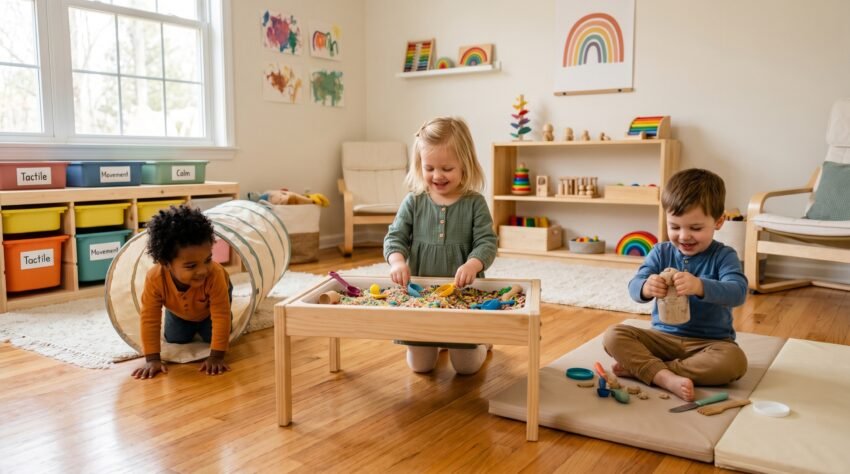
Toddlers learn about the world through movement, touch, sound, balance, and exploration. Some children naturally crave more sensory input than others and constantly seek activities that involve jumping, spinning, crashing, climbing, or touching different textures. These children are often described as sensory seekers.
Sensory seeking behaviors are common in early childhood because toddlers are still developing body awareness, emotional regulation, and motor control. However, when toddlers constantly crave movement or sensory stimulation, parents may feel overwhelmed or unsure how to help.
The good news is that sensory seeking activities for toddlers can provide safe, healthy ways to meet these sensory needs while supporting development, focus, and emotional regulation. The right activities can help children feel calmer, more organized, and better able to handle daily routines.
This guide explains sensory seeking behavior in toddlers, signs to watch for, and the best sensory activities that encourage learning, movement, and calm play.
What Is Sensory Seeking Behavior?
Sensory seeking behavior happens when a child craves extra sensory input from their environment. These children often actively seek movement, touch, sound, pressure, or visual stimulation to help their bodies and brains feel regulated.
Toddlers who are sensory seekers may:
- Constantly jump or climb
- Spin in circles frequently
- Crash into furniture
- Touch everything around them
- Chew on toys or clothing
- Seek rough play
- Love tight hugs or squeezing
- Have difficulty sitting still
Sensory seeking is connected to sensory processing, which refers to how the brain receives and responds to sensory information.
Some sensory-seeking behavior is completely normal during toddlerhood because young children naturally explore through movement and touch. However, some toddlers seek sensory input more intensely than others.
Why Sensory Activities Are Important for Toddlers
Sensory activities help toddlers process sensory information in healthy and organized ways. These activities provide structured opportunities for movement, touch, balance, and exploration.
Sensory play can help toddlers:
- Improve emotional regulation
- Develop fine motor skills
- Build gross motor coordination
- Increase concentration
- Reduce frustration
- Support language development
- Improve body awareness
- Encourage independent play
Sensory activities are not only calming but also support important developmental milestones.
Signs Your Toddler May Be Sensory Seeking
Every child behaves differently, but some signs may indicate stronger sensory-seeking tendencies.
Constant Movement
Some toddlers rarely sit still and are always running, jumping, climbing, or spinning.
Crashing Into Objects
Sensory seekers often intentionally bump into furniture, pillows, or people because they enjoy deep pressure input.
Touching Everything
Children may constantly touch walls, fabrics, toys, or objects around them.
Chewing on Non-Food Items
Chewing toys, sleeves, blankets, or pencils may help some toddlers regulate sensory needs.
Strong Preference for Rough Play
Some toddlers enjoy wrestling, jumping on cushions, or squeezing into tight spaces.
Difficulty Calming Down
Sensory-seeking toddlers sometimes struggle with transitions, quiet activities, or bedtime routines.
Movement-Based Sensory Activities for Toddlers
Movement activities help toddlers release energy while improving coordination and body awareness.
Trampoline Jumping
Mini trampolines provide strong movement input that many sensory-seeking toddlers enjoy.
Benefits
- Improves balance
- Supports coordination
- Helps regulate energy levels
Safety Tip
Always supervise closely and use age-appropriate trampolines with safety handles.
Animal Walks
Encourage toddlers to move like animals:
- Bear walks
- Crab walks
- Frog jumps
- Bunny hops
Benefits
These movements strengthen muscles and improve body awareness.
Obstacle Courses
Create simple indoor or outdoor obstacle courses using pillows, tunnels, chairs, or cones.
Skills Developed
- Coordination
- Planning
- Gross motor control
Dance Parties
Music and movement help toddlers release energy while improving rhythm and coordination.
Best Activities
- Freeze dance
- Follow-the-leader dancing
- Action songs
Swinging Activities
Swinging provides calming vestibular input that many sensory seekers enjoy.
Important Note
Monitor carefully because too much spinning or swinging may overstimulate some toddlers.
Heavy Work Activities for Sensory Seekers
Heavy work activities involve pushing, pulling, lifting, or carrying objects. These activities provide deep pressure input that can help sensory-seeking toddlers feel calmer and more organized.
Pushing Laundry Baskets
Let toddlers push baskets filled with soft items across the floor.
Benefits
- Strengthens muscles
- Provides calming resistance
- Improves coordination
Carrying Books or Toys
Ask children to help carry lightweight household items safely.
Why It Helps
Heavy work activities give the body strong sensory feedback.
Wall Pushes
Have toddlers place their hands against a wall and push firmly.
Best For
- Calming energy
- Building upper-body strength
Pulling Wagons
Pulling wagons outdoors combines movement and resistance.
Skills Developed
- Balance
- Coordination
- Muscle strength
Pillow Crashes
Create a safe pile of pillows or cushions for supervised crashing and jumping.
Why Toddlers Love It
Deep pressure input can feel organizing and calming.
Calming Sensory Activities for Toddlers
Not all sensory seekers need constant high-energy movement. Some activities help toddlers regulate emotions and relax.
Sensory Bottles
Fill bottles with glitter, beads, or colored water for calming visual input.
Benefits
- Encourages focus
- Supports emotional regulation
- Reduces overstimulation
Water Play
Scooping, pouring, and splashing water can be soothing for many toddlers.
Easy Ideas
- Water tables
- Sink play
- Bath toys
Kinetic Sand
Kinetic sand provides calming tactile input and supports creativity.
Skills Developed
- Fine motor control
- Sensory exploration
- Concentration
Playdough Activities
Squeezing, rolling, and shaping playdough strengthens hand muscles and reduces stress.
Blanket Roll Game
Wrap toddlers gently in a soft blanket like a “burrito.”
Why It Works
Deep pressure input may help some children feel secure and calm.
Mess-Free Sensory Activities
Parents often want sensory play ideas that are easy to clean up.
Sensory Bags
Fill sealed plastic bags with gel, beads, or foam for touch exploration without mess.
Sticker Walls
Place stickers on paper taped to a wall for vertical sensory play.
Benefits
- Fine motor practice
- Hand-eye coordination
- Visual focus
Texture Boards
Create boards with soft, rough, smooth, and bumpy textures.
Why It Helps
Toddlers explore sensory differences safely and independently.
Painter’s Tape Roads
Use painter’s tape to create roads and patterns on floors or walls.
Best For
- Visual play
- Creative movement
- Imaginative exploration
Fidget Bins
Fill bins with safe textured objects like pom-poms, fabric scraps, or large buttons.
Outdoor Sensory Activities for Toddlers
Outdoor play naturally provides rich sensory experiences.
Sandbox Play
Digging, scooping, and pouring sand supports tactile exploration and creativity.
Bubble Chasing
Chasing and popping bubbles combines movement with visual tracking.
Skills Developed
- Coordination
- Focus
- Gross motor movement
Mud Play
Mud kitchens and mud exploration provide excellent tactile sensory experiences.
Important Note
Always supervise and use safe outdoor spaces.
Nature Walks
Walks encourage toddlers to:
- Listen to sounds
- Touch leaves
- Observe colors
- Explore textures
Water Tables
Outdoor water play encourages sensory exploration while keeping toddlers engaged for long periods.
Fine Motor Sensory Activities
Fine motor sensory activities support hand strength and coordination.
Rice Sensory Bins
Hide scoops, cups, or toys inside rice bins.
Benefits
- Finger strength
- Sensory exploration
- Hand coordination
Bead Threading
Large beads improve focus and fine motor control.
Finger Painting
Painting with fingers combines creativity and tactile input.
Foam Play
Shaving cream or foam activities encourage messy sensory exploration.
Safety Tip
Use child-safe materials and supervise closely.
Sponge Squeezing
Squeezing water from sponges strengthens hand muscles and provides sensory feedback.
Sensory Seeking vs Normal Toddler Behavior
Many toddlers naturally enjoy movement and exploration. This does not automatically mean a child has sensory processing difficulties.
Sensory-seeking behavior may become more noticeable when:
- Behaviors are extreme or constant
- The child struggles to calm down
- Daily routines become difficult
- Safety concerns increase
- Emotional regulation is consistently challenging
Every child has unique sensory preferences, and many sensory-seeking behaviors improve with age and supportive activities.
Tips for Supporting a Sensory-Seeking Toddler
Create a Daily Sensory Routine
Consistent movement and sensory breaks can help toddlers stay regulated throughout the day.
Allow Safe Movement Opportunities
Provide climbing, jumping, and pushing activities in safe environments.
Watch for Overstimulation
Too much noise, movement, or activity can sometimes overwhelm toddlers.
Use Calm Transitions
Transitions can be difficult for sensory seekers. Gentle warnings and routines often help.
Encourage Outdoor Play
Outdoor environments naturally provide rich sensory experiences.
When to Talk to an Occupational Therapist
Some sensory-seeking behaviors may benefit from professional support.
Consider speaking with an occupational therapist if your toddler:
- Frequently hurts themselves unintentionally
- Has extreme meltdowns
- Cannot participate in daily routines
- Has severe sleep difficulties
- Constantly seeks dangerous movement
- Struggles significantly with emotional regulation
Occupational therapists can provide personalized sensory strategies and activities.
Benefits of Sensory Play for Toddlers
Sensory play supports development in many important ways.
Improves Brain Development
Sensory experiences strengthen neural connections during early childhood.
Supports Emotional Regulation
Many toddlers feel calmer and more organized after sensory activities.
Encourages Creativity
Open-ended sensory play promotes imagination and exploration.
Builds Motor Skills
Many sensory activities strengthen muscles and improve coordination.
Enhances Social Interaction
Group sensory play encourages sharing, communication, and cooperation.
Frequently Asked Questions
What are sensory seeking behaviors in toddlers?
Sensory seeking behaviors occur when toddlers crave extra sensory input through movement, touch, sound, or physical activity.
Are sensory-seeking behaviors normal?
Yes. Many toddlers naturally seek sensory experiences as part of normal development. Some children simply seek stronger input than others.
What activities help sensory-seeking toddlers?
Movement activities, heavy work tasks, water play, sensory bins, obstacle courses, and calming tactile activities can all help sensory-seeking toddlers.
What is heavy work for toddlers?
Heavy work includes activities that involve pushing, pulling, lifting, climbing, or carrying objects to provide deep sensory input.
How can I calm a sensory-seeking toddler?
Calming sensory activities may include:
- Deep pressure
- Water play
- Sensory bottles
- Quiet movement
- Weighted blankets
- Playdough
When should I worry about sensory issues?
You may want professional guidance if sensory behaviors interfere significantly with safety, sleep, daily routines, or emotional regulation.
Conclusion
Sensory seeking behaviors are common during toddlerhood because young children naturally explore the world through movement, touch, and active play. For some toddlers, sensory needs may be stronger, leading them to crave constant movement, deep pressure, or tactile experiences.
The right sensory seeking activities for toddlers can provide healthy outlets for these needs while supporting emotional regulation, focus, motor development, and confidence. From obstacle courses and trampoline jumping to sensory bins and calming water play, sensory activities can help toddlers feel more balanced and engaged throughout the day.
By understanding your child’s sensory preferences and creating safe opportunities for movement and exploration, you can support healthy development while making daily life calmer and more enjoyable for both toddlers and parents.